From some of my earliest memories I have loved pickles. As a kid I remember how delicious my grandmother’s garden raised cucumbers and beets were after spending time in a garlicky, salty, sour brine and would quite often come close to eating a whole jar on my own. Pickles are found in most cultures around the world since it’s a time honored method of preserving vegetables, fruits and other items for extended use while also giving them an aroma and flavor profile that make them great accompaniments to cured and roasted meats and fish. The pickling process can also add nutrients such as vitamin B, which is introduced by the bacteria active in the fermentation process.
The New York Food Museum’s Pickle History Section presents archaeological evidence of cucumbers native to India being pickled and transported to the Tigris Valley of Iraq in 2030 BCE. Many foods were pickled for consumption on long voyages before the days of refrigeration, these include not only vegetables but fish, pork and nuts. For my pickling project today I chose some beautiful cucumbers and a mix of red and green seedless grapes.
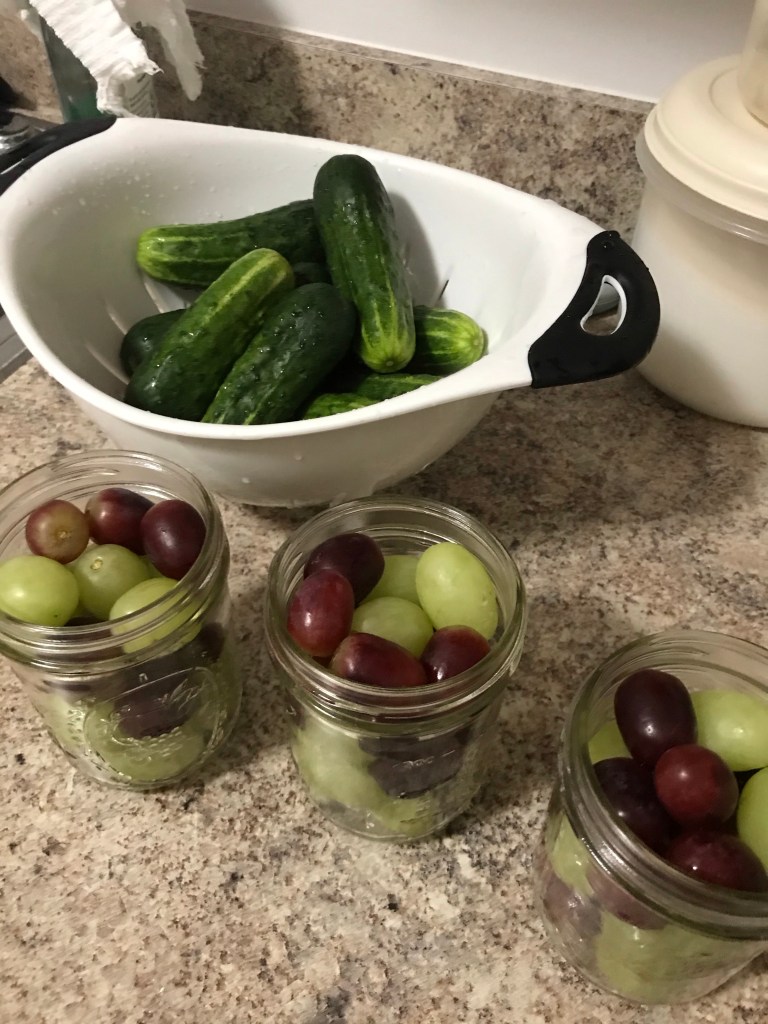
I used a mix of white and rice vinegars for the cucumbers and apple cider and rice vinegars for the grapes. In terms of aromatics the grapes got allspice, cloves, cinnamon and a little coriander. I chose fresh dill, coriander, mustard seed, celery seed and fresh garlic for the cucumbers. After jarring up both items I followed a 3-2-1 ratio for the brine which gave me 3 parts vinegar, 1.5 parts water and using salt/sugar to taste as well as to adjust the acidity. Vinegars are the product of a double fermentation in that the sugars in grapes are fermented to produce the alcoholic beverage wine, wine is then passed through a second ferment which involves inoculating vats of younger wine with acetobacter bacteria to produce ascetic acid. Once the brine is boiling it’s time to pour into my jars!
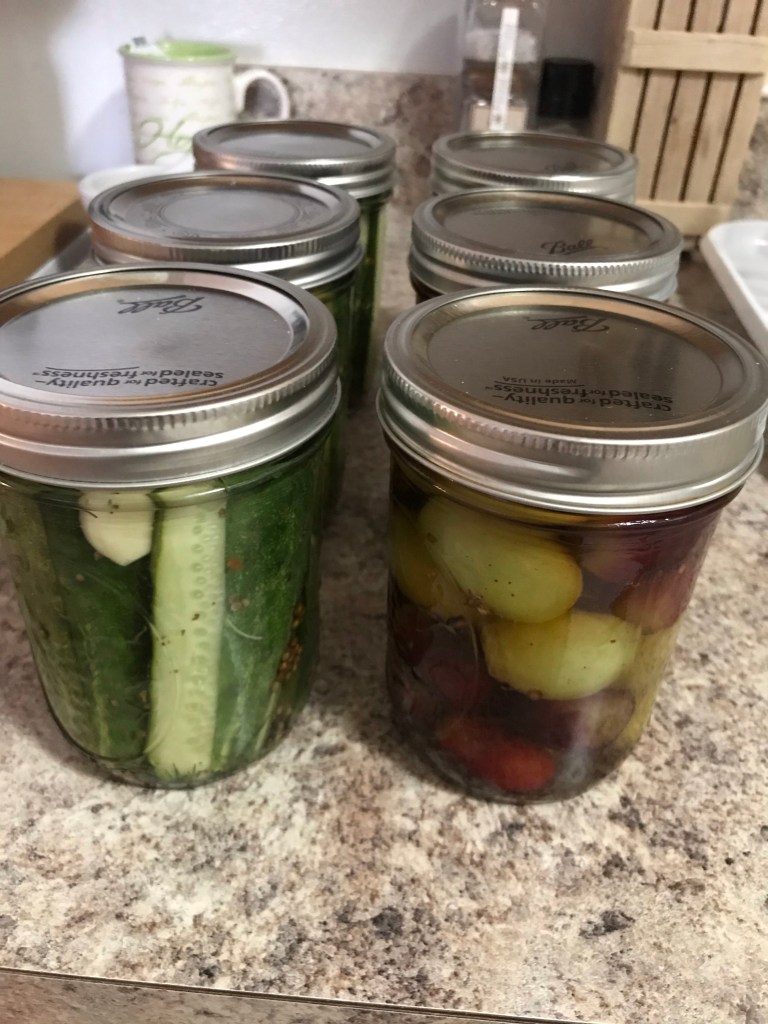
As the grapes and cucumbers sit in their brines for a few days the fermentation involves the water leaving the food items, which dilutes the brine. The acidity is then drawn into whatever’s being pickled and this lowers its pH, which makes it increasingly hostile to harmful bacteria. Now it’s a matter of waiting and giving them time to build flavor. Can’t wait!
 MI Kitchen
I love pickles! Great information too! Happy to see you doing something you love!
LikeLike